


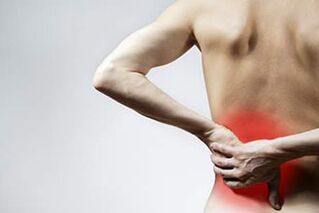
Back pain in the lumbar area is common.By age 30, these feelings occur in 70% of people, regardless of occupation type, lifestyle and physical activity.Ignoring low back pain can have adverse health consequences because the symptoms already indicate interference with body functions.
When consulting a neurologist:
- carry out inspections;
- listen to patient complaints;
- Make a preliminary diagnosis;
- Reference will be made to further research if necessary;
- An individualized treatment plan will be prescribed.
Causes of low back pain
The causes of waist pain are different, and it is necessary to determine the location of the pain and analyze its nature.It is customary to distinguish:
- Severe pain - severe back pain in the lower back, with obvious lesions;
- Pathogenic pain - lingering pain that is a reflection of disease in other anatomical locations.
How often it occurs, how long the pain lasts, and the area affected are all important.Back failure is usually due to:
- Age-related changes that reduce the spine's ability to perform its shock-absorbing function;
- the stress of having children;
- Vertebral displacement, trauma, and compression fractures;
- Spinal deformity;
- Intervertebral hernia, osteochondrosis, spinal nerve root compression.
If lower back pain limits mobility and prevents you from bending, we're talking about a sprain.Numbness, coughing, increased pain when sneezing, sensation spreading to the lower limbs - these are radiculopathy syndromes.Long-term exacerbation of pain is caused by problems with internal organs.
Back pain occurs in the right side of the lower back due to muscle spasms, irritation of nerve fibers, problems with the musculoskeletal system or the spine.Problems with the liver, right kidney, right ovary (in women), bowel and gallbladder can all be affected.A similar cause can cause a person to experience back pain on the left side of the lower back.However, in this case, where there is primary pain, you should pay attention to the left kidney, left ovary (in women), stomach, intestines and pancreas.
If you experience back pain on the left side or pain on the right side after being immobile for a long time after waking up, it indicates spondyloarthropathy.Severe pain when the temperature changes (in the shower or due to hypothermia) is a sign of acute low back pain.
If pain occurs, it is recommended that men first consult a urologist and women first consult a gynecologist.You will need an ultrasound of your internal organs, blood and urine tests.When examining the spine, an MRI of the lumbar area can provide good results.
Primary back pain in the upper lower back is caused by a variety of causes:
- kidney disease;
- Heart disease (angina pectoris, myocardial infarction);
- pleurisy;
- pneumonia;
- Esophageal diseases;
- appendicitis;
- Inflammation of the gallbladder.
Acute back pain in the upper lower back:
- Radiculitis;
- Osteochondrosis with disc displacement;
- Injuries to the spine and ribs;
- Myositis (muscle inflammation).
Back pain below the lower back is caused by morphofunctional musculoskeletal changes (osteochondrosis or spondyloarthropathy).In this condition, patients experience severe back pain below the lower back.
How to relieve lower back pain
If you experience severe lower back pain, there are simple steps you can take to relieve the discomfort.You should lie on a level surface and relax.Note that a soft feather bed that bends dramatically under your weight won't work.The legs should be placed at a certain height to reduce the load on the spine.
When the discomfort subsides, you should carefully roll onto your side and onto all fours.The purpose of this "gymnastics" is to minimize the load on the back.You need to stand up straight with a support and hold it with your hands.A brace for lower back pain allows you to immobilize this area of your body, which can also reduce pain.At the same time, it should capture not only the diseased area, but also the body parts above and below it.Analgesics can also be used to relieve pain and reduce inflammation.They are available in the form of tablets or as injections for the treatment of back and waist pain (in this case, blockade injections are only performed in clinical settings).
After the symptoms disappear, you must go to the clinic for treatment.Self-medication is not acceptable.With the use of ointments and belts for lower back pain, patients can endure the pain for a longer period of time, thereby exacerbating the condition.As a result, the back muscles weaken and the pain enters a chronic stage.Painkiller abuse can lead to addiction.
Treatment of low back pain
If your lifestyle causes periodic muscle cramps (which may be caused by exercise or physical exertion), you should have a muscle relaxant in your home medicine cabinet.But these drugs should also be prescribed in consultation with a doctor.When treating low back pain, various measures are used depending on the diagnosis:
- Reflexology.These include acupuncture (injections with special needles in certain areas) and electroacupuncture (the use of electrical pulses).It can also be administered in the form of transcutaneous electrical nerve stimulation (which inhibits pain signals entering the brain).
- physiotherapy.Use magnetic and laser treatment technology, as well as drug electrophoresis and sound wave therapy to improve the effectiveness of drug use.
- Therapeutic exercise and massage.These measures are effective for rehabilitation after spinal disease and injury.Special supervision is required.
- Surgical intervention.May be necessary for hernias that cause compression of the spinal cord or spinal roots.
Treatment is often complex and requires a combination of different approaches.The duration and effectiveness of treatment depend on the promptness of treatment.